What Is Forex Trading? A Complete Beginner’s Guide
Forex trading, also known as foreign exchange trading, is the process of buying and selling currencies to make a profit. It is one of the largest and most active financial markets in the world, with trillions of dollars traded every single day. Unlike stock markets, forex operates globally and remains open 24 hours a day, five days a week.
Many people are drawn to forex trading because of its flexibility, accessibility, and the potential to earn income from currency price movements. However, before stepping into this market, it is important to understand how forex trading works, why currency prices change, and what risks are involved.
Understanding the Forex Market
The forex market is a global marketplace where currencies from different countries are exchanged. Every time you travel abroad and exchange money, you are participating in the market on a small scale. Online forex trading takes this concept further by allowing traders to speculate on currency price movements using trading platforms.
Currencies are traded in pairs because one currency is always exchanged for another. For example, in the EUR/USD pair, the euro is traded against the US dollar. The value of the pair changes based on how strong or weak one currency is compared to the other.
The market does not have a central exchange like stock markets. Instead, it operates through a network of banks, financial institutions, brokers, and individual traders around the world. This decentralized structure is one reason why trading is highly liquid and fast-moving.
How Forex Trading Works
Forex trading involves predicting whether the value of one currency will rise or fall against another currency. If you believe a currency will strengthen, you buy it. If you believe it will weaken, you sell it.
For example, if you expect the euro to increase in value against the US dollar, you would buy the EUR/USD pair. If the price moves in your favor, you can close the trade at a profit. If the market moves against your prediction, you may face a loss.
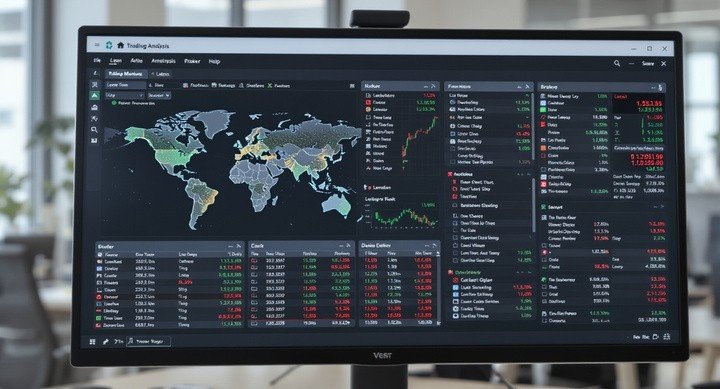
trades are executed through online brokers that provide access to trading platforms. These platforms display real-time price charts, allow order placement, and offer tools for analysis. Most brokers also provide demo accounts where beginners can practice without risking real money.
Why People Trade Forex
Forex trading has gained popularity over the years due to several practical advantages. One major reason is its accessibility. Unlike traditional markets, trading does not require a large investment to start. Many brokers allow traders to open accounts with relatively small amounts.
Another reason is market availability. Since the market operates across different time zones, traders can trade during hours that suit their schedule. This makes fappealing to people who want to trade part-time alongside other commitments.
Key Participants in Forex Trading
The forex market includes a wide range of participants, each playing a specific role. Central banks influence currency values by adjusting interest rates and monetary policies. Commercial banks and financial institutions conduct large-scale currency transactions daily.
Important Forex Trading Concepts
- Currency Pairs: Currencies are traded in pairs, such as EUR/USD or GBP/JPY
- Pips: A pip is the smallest price movement in a currency pair
- Leverage: Leverage allows traders to control larger positions with smaller capital
- Spread: The difference between the buying and selling price
- Lot Size: The amount of currency being traded in a position
Risks Involved in Forex Trading
While forex trading offers opportunities, it also carries significant risks. Currency prices can change rapidly due to economic news, political events, and global market sentiment. These sudden movements can lead to unexpected losses, especially when using high leverage.
How Beginners Can Start Forex Trading
Starting trading does not require complex steps, but preparation is essential. Beginners should first learn the basics of the market and practice on demo accounts. This allows them to understand price behavior without financial risk.
Choosing a reliable broker is also crucial. A good broker should be regulated, transparent, and provide educational resources. Once comfortable, traders can move to live trading with a small investment and gradually build experience.
The Role of Education and Strategy
Forex trading is not a get-rich-quick scheme. It requires continuous learning and skill development. Successful traders spend time analyzing market trends, economic indicators, and price patterns.
Frequently Asked Questions (FAQs)
1. What is forex trading in simple words?
Trading is the buying and selling of currencies to make a profit from changes in their exchange rates.
2. Is forex trading legal?
Yes, trading is legal in most countries, but traders must use regulated brokers and follow local laws.
3. How much money do I need to start forex trading?
Many brokers allow beginners to start with a small amount, sometimes as low as $50 to $100, though higher capital is recommended for better risk management.
4. Is forex trading risky for beginners?
Yes, trading involves risk, especially for beginners. Learning, practice, and proper risk management can reduce potential losses.
5. Can I trade forex part-time?
Yes, many traders trade part-time because the market operates 24 hours a day, allowing flexible trading hours.
Final Thoughts
Trading is a dynamic and global market that offers both opportunities and challenges. Understanding how the market works, managing risk wisely, and focusing on long-term learning are key to success. For beginners, patience and discipline matter more than quick profits.
With the right mindset, proper education, and consistent practice, trading can become a valuable financial skill rather than a risky gamble