Introduction:
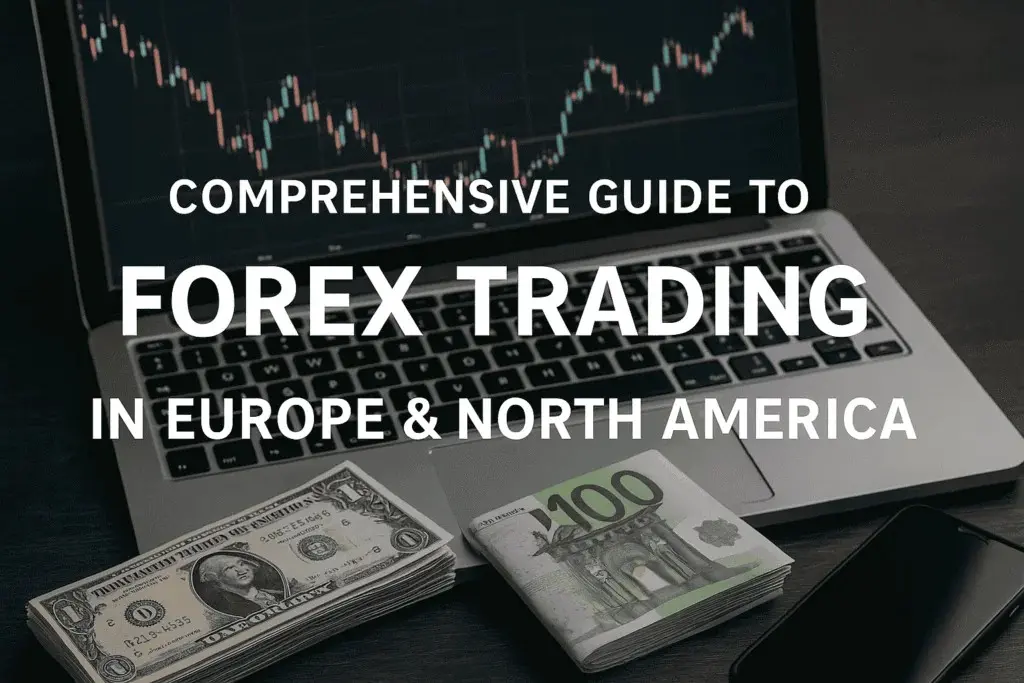
Forex trading in Europe and north America Europe and North America has long been the foundation of the global forex market. With financial hubs such as London, New York, and Toronto, these regions contribute the majority of daily forex volume. Their strong regulations and advanced technology make them ideal for both professional and retail traders.
This guide provides an overview of forex trading in Europe and North America, exploring how both markets operate, the rules that shape them, and what traders should consider when participating in these regions.
Understanding Forex Trading in Europe and North America
The forex market connects global currencies through decentralized exchanges. In Europe and North America, the market is highly structured and backed by institutional liquidity.
Key features of trading in these regions include:
- Strong financial regulation
- Transparent pricing
- Tight spreads
- Efficient trade execution
Both regions also host a wide range of brokers that cater to retail and institutional clients.
Major Forex Markets in Europe
Europe remains the largest forex center in the world, with London handling over one-third of global forex volume. Other important markets include Frankfurt, Paris, and Zurich.
1. London (United Kingdom)
London dominates global forex trading. The city’s location between Asian and U.S. sessions allows traders to benefit from overlapping hours, increasing liquidity. The Financial Conduct Authority (FCA) oversees trading activities, ensuring fair practices and strict compliance with regulations.
2. Frankfurt (Germany)
Frankfurt is home to several major financial institutions and plays a significant role in euro-based currency trading. The Federal Financial Supervisory Authority (BaFin) regulates brokers and ensures capital transparency.
3. Zurich (Switzerland)
Switzerland is known for its financial privacy and stability. Swiss brokers often attract traders looking for security and reliability. The Swiss Financial Market Supervisory Authority (FINMA) ensures compliance with international financial standards.
Major Forex Markets in North America
North America includes the U.S. and Canada, two of the most influential participants in global forex. These countries are known for advanced financial systems and strict oversight.
1. New York (United States)
New York is the second-largest forex trading center globally. The U.S. dollar serves as the benchmark currency in most global trades. U.S. brokers are regulated by the Commodity Futures Trading Commission (CFTC) and the National Futures Association (NFA), both of which prioritize transparency and trader protection.
2. Toronto (Canada)
Canada plays an important role in North American trading, especially through its strong economic ties with the U.S. The Canadian dollar (CAD) is a major global currency. Brokers are supervised by the Investment Industry Regulatory Organization of Canada (IIROC), which enforces high standards of capital and compliance.
Comparing Forex Trading in Europe and North America
While both regions are advanced, they differ in trading style, regulation, and broker requirements.
Regulations
- Europe: Overseen by agencies such as the FCA (UK), BaFin (Germany), and CySEC (Cyprus). Leverage limits are generally lower due to the European Securities and Markets Authority (ESMA) rules.
- North America: The CFTC and NFA enforce tighter controls in the U.S., including lower leverage caps (typically 1:50). Canada maintains similar but slightly more flexible rules.
Market Hours
Both regions benefit from overlapping sessions, especially between London and New York. This overlap period provides the highest liquidity and volatility, ideal for active traders.
Broker Options
European brokers often offer more flexibility with account types and leverage, while North American brokers are known for stricter compliance and investor protection.
Regulatory Framework and Compliance
Regulation is the cornerstone of both regions’ forex ecosystems.
In Europe, ESMA sets the general framework, with national bodies ensuring local compliance.
In North America, both the CFTC and NFA maintain transparency, enforce anti-fraud measures, and require brokers to hold segregated client funds.
Key compliance requirements include:
- Verification of trader identity (KYC)
- Segregation of client funds
- Leverage and margin controls
- Regular audit and reporting
Such measures create a safer environment for traders while maintaining fair competition.
Popular Forex Brokers in Europe and North America
Some globally recognized brokers operating across both regions include:
- IG Group (UK)
- Saxo Bank (Denmark)
- OANDA (U.S./Canada)
- FOREX.com (U.S.)
- FXCM (UK/U.S.)
- Interactive Brokers (U.S.)
These brokers offer strong platforms, reliable liquidity, and compliance with regional laws. Traders should always verify broker licenses before opening an account.
Trading Instruments and Currency Pairs
Both regions provide access to all major, minor, and exotic currency pairs. The most traded pairs include:
- EUR/USD
- GBP/USD
- USD/JPY
- USD/CAD
Additionally, many brokers in these regions offer CFD products linked to indices, commodities, and cryptocurrencies, expanding trader opportunities.
Technology and Trading Platforms
Technology plays a key role in both regions’ forex markets. Traders typically use platforms such as:
- MetaTrader 4 (MT4)
- MetaTrader 5 (MT5)
- cTrader
- TradingView
Automated trading systems, advanced analytics, and mobile apps are widely supported, allowing traders to manage positions in real time.
Market Trends and Participation
The European and North American forex sectors continue to evolve with digital innovation and higher retail participation. Trends include:
- Growth of mobile trading
- Integration of AI-driven analytics
- Increased demand for low-cost execution
- Expansion of multi-asset platforms
Institutional investors and hedge funds also play a major role in maintaining market liquidity.
Educational Resources and Tools
Traders in both regions rely on education and digital tools to improve their skills.
Useful forex tools include:
- Economic calendars for monitoring data releases
- Currency converters and calculators for precise trade sizing
- Charting tools for technical analysis
For a detailed overview of available platforms, visit our Comprehensive Guide to Forex Tools and Resources.
Key Challenges for Traders
Forex trading in Europe and North America comes with challenges such as:
- High competition among brokers
- Strict margin requirements
- Market volatility during economic events
Understanding regional rules and practicing disciplined risk management helps traders navigate these challenges effectively.
Opportunities for Investors
Both regions offer long-term trading opportunities through:
- Stable regulatory environments
- Reliable infrastructure
- Wide broker selection
- Access to institutional liquidity
Conclusion
Forex trading in Europe and North America remains the foundation of global currency exchange. These regions combine liquidity, advanced technology, and strong regulation, making them central to global finance.
By understanding the rules, platforms, and opportunities, traders can participate confidently in these markets.
For further learning on tools and resources, visit the Comprehensive Guide to Forex Tools and Resources or explore more under the Forex Trading in Europe & North America category